
Choosing the wrong plywood can lead to swollen cabinet edges, sagging shelves, loose hinges, and early delamination. The right choice depends on more than the product name. You must consider moisture exposure, furniture load, panel span, hardware, core quality, and budget.
As a practical rule, verified BWP plywood works well in wet kitchen zones. Quality MR or BWR plywood can suit many bedroom applications. However, thickness, support, sealing, and workmanship also affect long-term furniture performance.
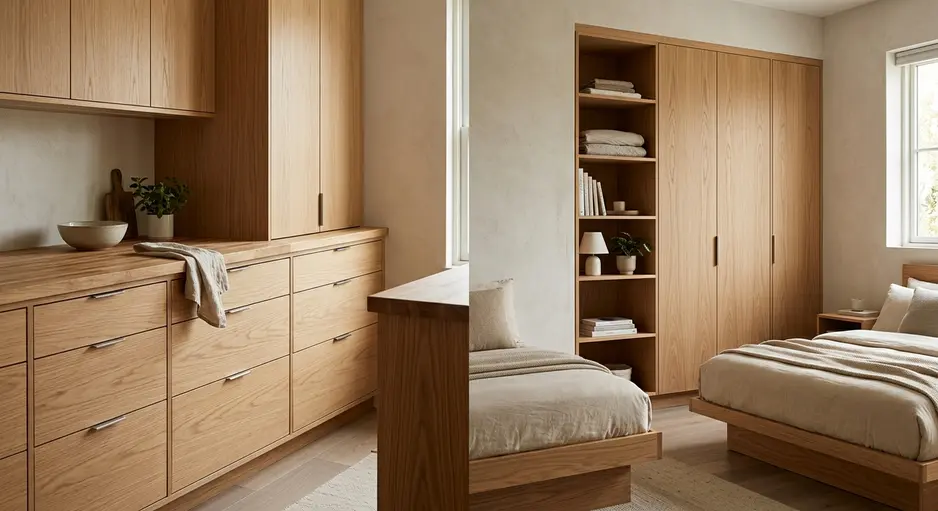
The best plywood for kitchen furniture is usually certified BWP or IS 710 marine plywood in areas exposed to leaks and humidity. The best plywood for bedroom furniture is often good-quality MR or BWR plywood, provided the room is dry and well ventilated.
Do not select plywood by grade alone. A wide shelf may sag even when made from a premium board if it is too thin or poorly supported. Likewise, a water-resistant panel may fail when its edges and service holes are left unsealed.
| Furniture application | Recommended grade | Typical thickness | Main reason |
|---|---|---|---|
| Under-sink cabinet | IS 710/BWP | 16–19 mm | High moisture exposure |
| Kitchen base cabinet | BWP or suitable BWR | 16–19 mm | Moisture and load resistance |
| Overhead kitchen cabinet | BWR or BWP | 16–18 mm | Humidity and hardware holding |
| Wardrobe carcass | MR or BWR | 16–19 mm | Dry-interior performance |
| Wardrobe back | MR or BWR | 6–9 mm | Lower structural load |
| Bed platform or frame panel | BWR or BWP as required | 18–19 mm | Furniture load-bearing capacity |
| Drawer sides and bottoms | MR or BWR | 9–16 mm | Depends on span and load |
MR means moisture resistant, not waterproof. MR grade plywood is commonly used for wardrobes, study tables, bedside units, and storage furniture in dry rooms. It can be a practical and economical bedroom furniture plywood when there is no known dampness.
Avoid using it against damp exterior walls or close to plumbing. Coastal humidity, poor ventilation, and seepage can also shorten its service life.
BWR means boiling water resistant. It offers better moisture resistance than MR plywood and is often considered for humid bedrooms, wardrobes against exterior walls, and selected kitchen cabinets away from direct water exposure.
BWR can provide a useful balance between protection and cost. Even so, the product’s certification, bond quality, and core construction should be checked before purchase.
BWP means boiling water proof. This grade is generally preferred for sink cabinets, base units, utility storage, and other moisture-prone furniture. Genuine BWP plywood for kitchen applications should have a strong adhesive bond and reliable core quality.
Claims such as “waterproof” should be supported by the applicable standard, certification, and test records. Product labels alone are not enough.
Not always. A board marketed as BWP should not automatically be treated as certified marine plywood. In India, marine plywood is associated with IS 710 requirements, while general-purpose plywood is covered by IS 303. Check the BIS licence details, grade, invoice description, manufacturer, and supporting documentation.
Water exposure is not equal throughout a kitchen. Use verified BWP material in areas where leaks, wet cleaning, or repeated humidity are foreseeable. These include:
Using BWP throughout a modular kitchen offers more consistent protection, but it also raises the project cost. A zone-based plan may use BWP in wet areas and verified BWR plywood in dry overhead or low-risk cabinets.
Laminate does not turn low-grade kitchen furniture plywood into a waterproof board. Water can still enter through exposed edges, joints, screw holes, appliance cut-outs, or damaged surfaces.
Consider two similar sink cabinets. One uses MR plywood, while the other uses certified BWP plywood with properly sealed edges. A slow pipe leak is likely to make the MR panel swell and delaminate sooner. The BWP cabinet has better protection, but the leak must still be repaired quickly.
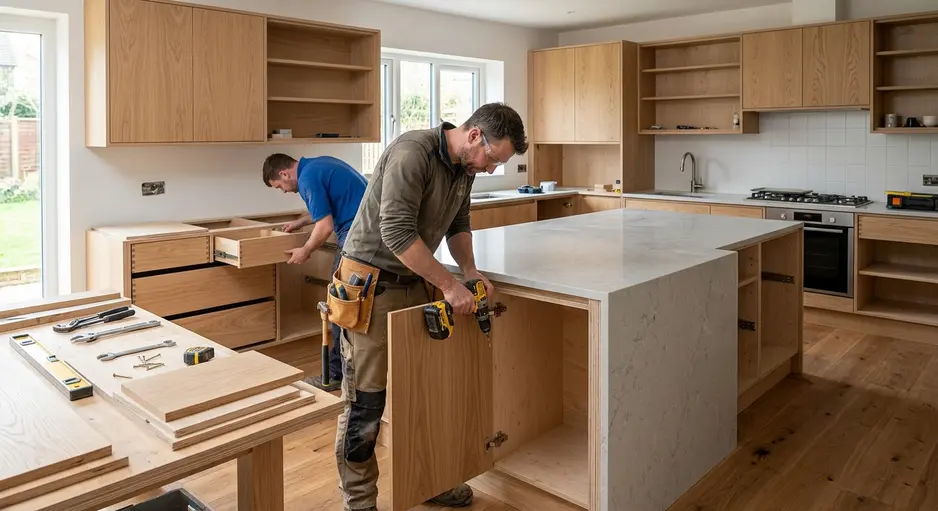
Quality MR plywood is often suitable for a wardrobe in a dry, ventilated room. BWR is a safer choice in humid homes or when the wardrobe stands against an exterior wall. BWP may be justified when there is known seepage or an attached bathroom creates frequent moisture.
Large shutters also need straight and calibrated plywood. Consistent thickness supports accurate hinge fitting, smooth laminate pressing, and even gaps between doors.
Grade alone does not decide structural strength. For beds, storage boxes, and wide panels, consider bending strength, panel thickness, veneer quality, span between supports, centre rails, and expected load.
Hydraulic beds and storage beds place extra stress on hinges and fixing points. Their design should include suitable framing and strong fastener locations. Wide unsupported boards may need professional review.
A thin, wide shelf can bend even when made from a good plywood grade. An 18–19 mm shelf with a front stiffener or centre support will usually perform better than a thinner panel across the same span. Support placement can matter as much as grade.
Usually not. The best plywood for bedroom furniture in a consistently dry room may be MR or BWR grade. Upgrade when humidity is high, walls are damp, or furniture is near a bathroom or plumbing line.
Load capacity depends on the panel span, face veneer direction, core quality, number of veneer layers, support spacing, and fastener placement. Edge stiffeners can help reduce bending. A concentrated load also creates more stress than the same weight spread across a shelf.
It is commonly used for kitchen carcasses and shutters. However, plywood thickness for furniture is not a universal strength guarantee. Panel dimensions, support, grade, hardware, and expected load must also be considered.
Inspect exposed edges for core gaps, overlapping layers, and uneven construction. Look for straight edges, smooth faces, consistent density, and no visible delamination. Internal voids can weaken screw holding, reduce edge durability, and affect the finished panel.
Calibrated plywood is processed to maintain a more consistent thickness across the board. It can improve modular kitchen alignment, CNC cutting, laminate pressing, hinge installation, and shutter gaps. It also creates cleaner edge finishes.
Water resistance and termite resistance are different properties. Water performance mainly depends on adhesive bond quality and board construction. Termite resistance requires suitable treatment and evidence for the claim.
No board should be treated as permanently immune to termites. Site pest control, dry storage, leak prevention, and building maintenance remain important.
Ask for the stated emission class, applicable test method, and third-party reports where available. Recognized documentation may refer to methods such as EN 717-1, ISO 12460, or US EPA TSCA Title VI where relevant.
Terms such as “eco-friendly,” “E0,” and “zero emission” should not be assumed to mean the same thing without test data and product traceability.
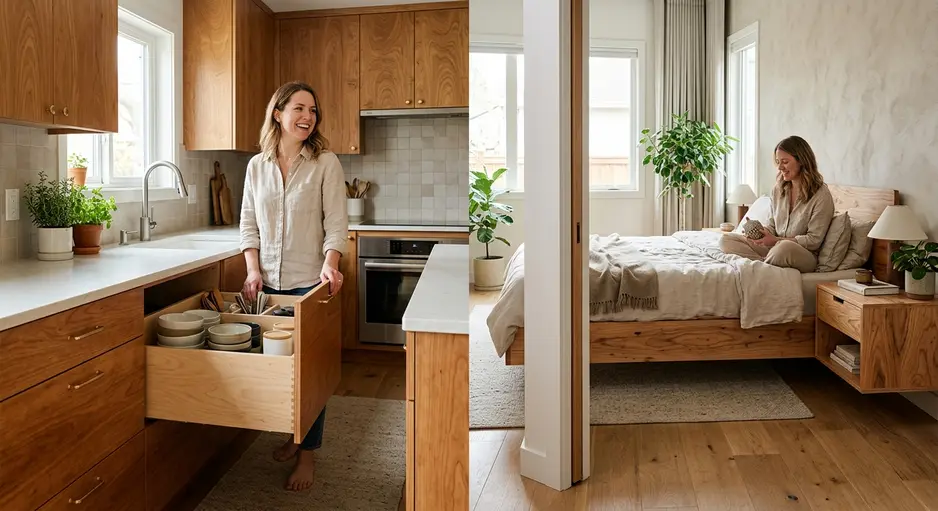
When comparing the best plywood brands for furniture, use the same criteria for each product. Review the grade, BIS certification, core construction, calibrated thickness tolerance, bond tests, termite-treatment claims, emission records, warranty, and dealer traceability.
Compare costs only between boards of the same grade, thickness, and size. A cheaper panel may not offer equal performance or warranty protection.
Buyers evaluating Suntek Ply and other manufacturers should apply this same checklist. Discuss the kitchen layout, bedroom conditions, furniture design, moisture exposure, and load requirements with a plywood specialist before ordering.
Best Plywood for Kitchen and Bedroom Furniture
Use verified BWP or IS 710 plywood in wet kitchen zones. Consider BWR for lower-risk kitchen cabinets and quality MR or BWR for dry bedroom furniture. Beds and long shelves should be specified according to load, span, thickness, and support.
The right grade is only the starting point. Core construction, accurate installation, sealed edges, suitable hardware, and regular maintenance work together to create durable plywood for furniture. Consult a plywood specialist with your measurements and site conditions before requesting a quote.
Certified BWP or IS 710 marine plywood is generally preferred for sink cabinets and other high-moisture zones. Verified BWR plywood may suit lower-risk areas, depending on the local climate, maintenance, and budget.
Quality MR plywood often suits dry bedroom furniture. BWR is preferable for humid rooms or wardrobes placed against walls that may develop dampness. BWP is mainly needed where there is a known seepage risk.
BWP provides a high level of water-resistant bond performance. Finished furniture can still suffer damage from prolonged leaks, exposed edges, unsealed joints, poor installation, or damaged surface finishes.
Carcasses, shutters, and many shelves commonly use 16–19 mm plywood. Backs often use 6–9 mm panels. The final choice depends on shelf width, support spacing, hardware, and expected load.
It is worth considering in wet zones and homes with a high leakage or humidity risk. Whether it is needed throughout the kitchen depends on the budget and desired level of protection.