
Laminates offer a practical way to bring colour, texture, and character to modern furniture. They work well on kitchen cabinets, wardrobes, wall panels, media units, desks, and office storage. Yet appearance is only part of the decision.
The best laminate finishes for modern interiors should suit the room’s lighting, daily use, cleaning needs, and moisture exposure. It is also important to separate the finish from the product grade. The finish controls the look and feel, while the grade determines where and how the laminate should be used.
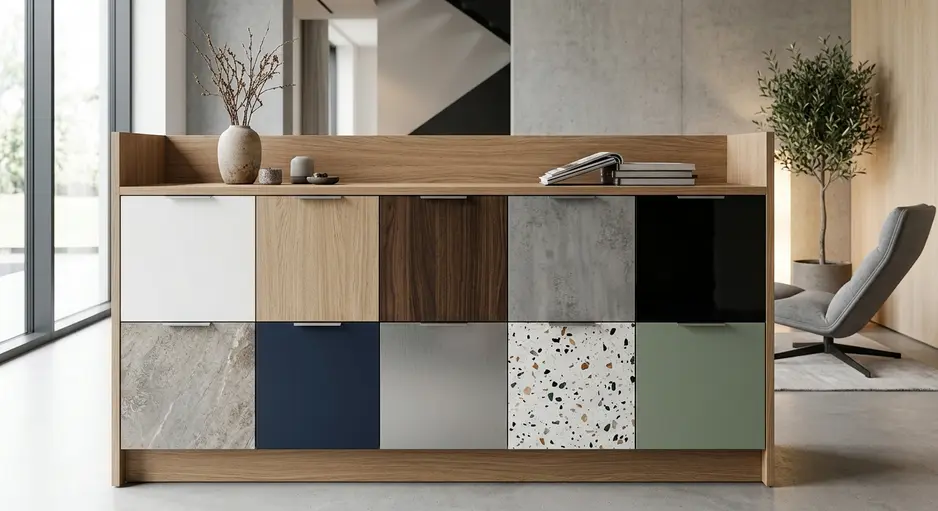
Laminate surface finishes change how furniture responds to light and touch. Gloss can make a small room feel brighter, while matte creates a softer look with less glare. Texture adds depth and can make wood, stone, or fabric patterns feel more realistic.
Finish also affects the visibility of fingerprints, stains, and fine scratches. However, no surface should be judged by appearance alone. Review the manufacturer’s technical data for abrasion, impact, heat, and stain performance. Standards such as NEMA LD 3 and EN 438 provide recognised terms and test methods for decorative laminates.
Matte: Soft and low-reflection. Ideal for cabinets and wardrobes. It is versatile, although oils may show on dark shades.
Super matte: Velvety with very low sheen. Best for handleless furniture. Confirm whether the product has tested anti-fingerprint properties.
High gloss: Bright and reflective. Useful for feature cabinets, but fingerprints and fine scratches may be more visible.
Wood grain: Warm and natural in appearance. Suitable for wardrobes, tables, wall panels, and office furniture.
Textured: Tactile and embossed. It adds depth, though deep textures can take longer to clean.
Stone finish: Inspired by marble, granite, slate, or concrete. Check the grade before using it on horizontal surfaces.
Metallic: Brushed or reflective. It gives accent furniture a contemporary character.
Solid colour: Clean and uniform. Easy to coordinate, but dark plain shades may reveal handling marks.
Fabric finish: Soft and linen-like. Popular for bedrooms, offices, and decorative panels.
Leather finish: Rich and tactile. Best used as a controlled accent rather than across every surface.
A matte laminate finish has low reflection and a calm appearance. It suits minimalist, Scandinavian, and warm contemporary rooms. Use it on wardrobes, study furniture, media units, or kitchen cabinetry.
Light and mid-tone matte colours often conceal dust and handling marks better than deep black or navy. This makes matte one of the most adaptable furniture laminate finishes for busy homes.
Super-matte surfaces have a velvety look that works especially well on handleless cabinets. Charcoal, black, navy, beige, and muted green can appear rich without creating harsh reflections.
Super matte and fingerprint resistant are not automatically the same. If reduced fingerprint visibility matters, ask for technical documentation and care instructions. Test a sample with clean and slightly oily hands before making a final choice.
A high gloss laminate finish reflects light and can help compact rooms feel brighter. It is popular for kitchen shutters, entertainment units, and statement storage.
The polished surface can show fingerprints, smudges, and fine scratches more easily than patterned or low-sheen options. Clean it with a soft microfibre cloth and a non-abrasive solution. Avoid rough pads and harsh powders.
Wood grain laminate creates a natural wood appearance without the colour variation found in some veneers. Oak, walnut, ash, and teak-inspired laminate designs for interiors can add warmth to otherwise simple spaces.
These modern furniture laminates work on wardrobes, desks, wall panels, tables, and cabinets. Keep the grain direction consistent across adjoining shutters. Misaligned patterns can make well-built furniture look untidy.
A textured laminate surface brings depth to large cabinet elevations and plain furniture. Options may include linear, pore, ribbed, brushed, or synchronised wood textures.
Subtle textures can disguise minor handling marks while adding visual detail. Deep grooves may hold more dust, so consider cleaning access before using them near cooking areas or on frequently touched furniture.
Stone finish laminate recreates the look of marble, granite, slate, or concrete. It is a practical design choice for coffee tables, sideboards, console units, and selected cabinet surfaces.
It offers the visual effect of stone with less weight and simpler furniture fabrication. Countertop use depends on the product grade, substrate, edge treatment, and manufacturer instructions. A stone pattern alone does not make a laminate suitable for heavy horizontal wear.
A metallic laminate finish may resemble brushed steel, bronze, copper, aluminium, or champagne metal. It works well on reception desks, bar units, retail fixtures, and accent cabinets.
Use metallic surfaces selectively to avoid excessive reflection. Pair them with wood grain or matte solid colours for balance. Some patterns are directional, so all panels should be planned and cut in the same visual direction.
Solid colour laminate is a clean option for modular furniture. The range can include warm neutrals, earthy tones, pastels, dark shades, and bold accent colours.
It suits kitchens, wardrobes, children’s furniture, and office storage. For a balanced scheme, choose one dominant neutral and use one or two accent colours. This keeps the room modern without making it feel busy.
Fabric finish laminate recreates the softness of woven material while retaining a practical decorative surface. It can add warmth to wardrobe shutters, bedside units, office partitions, and wall panels.
The pattern offers a softer effect without using upholstery across every area. Since pale fabric designs may show stains and deep weaves can collect dust, test a sample for cleaning and mark visibility.
Leather-finish laminate provides a rich tactile effect for headboards, bar cabinets, executive desks, and decorative panels. It pairs well with dark wood, matte black, and muted metallic details.
Use it as an accent rather than covering every large surface. This keeps the room refined and prevents the texture from feeling visually heavy.
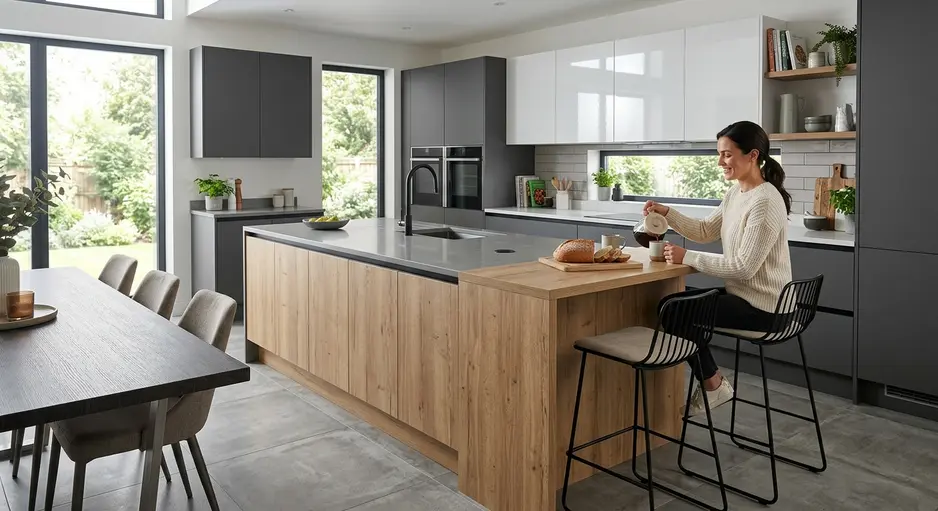
Matte and verified anti-fingerprint finishes are practical for frequently handled shutters. High gloss suits bright contemporary kitchens where regular wiping is acceptable. Wood grain can add warmth to lower cabinets and tall units.
When selecting laminate finishes for kitchen cabinets, pay close attention to the substrate, ventilation, joints, and edge sealing. A moisture resistant surface does not make exposed board edges waterproof. Wipe spills quickly, especially near sinks and dishwashers.
Matte and wood grain finishes create calm, balanced wardrobe elevations. Linen effects add softness to bedrooms, while gloss can be used as a limited accent in smaller rooms.
Before choosing laminate finishes for wardrobes, view large samples under the room’s actual lighting. Dark surfaces may show fingerprints more clearly than small showroom samples suggest.
Wood grain is suitable for desks and executive storage. Matte solid colours work well on workstations and cabinets, while fabric or textured designs can define partitions and shared areas.
Laminate finishes for office furniture should be easy to clean and suitable for the expected wear. Desktops need the correct horizontal-grade product rather than a laminate intended only for vertical panels.
Stone effects can make coffee tables and consoles stand out. Metallic laminates work as small accents, while wood and matte combinations suit entertainment units and wall panels. Limit the palette to two or three related finishes for a cohesive result.
For durable laminate finishes for interior furnishings, compare technical specifications rather than relying on labels such as “premium” or “luxury.” A suitable product, correctly installed, is more valuable than an attractive finish used in the wrong setting.
Combine super-matte beige upper cabinets with oak wood grain lower units and a stone-effect breakfast counter. The matte surfaces limit glare, while the oak pattern adds warmth.
Use matte taupe wardrobe fronts with linen-finish central panels and slim metallic handles. This creates visual depth without adding too many competing patterns.
Pair a walnut wood grain desk with charcoal matte storage and brushed bronze accents. The result feels professional, warm, and contemporary.
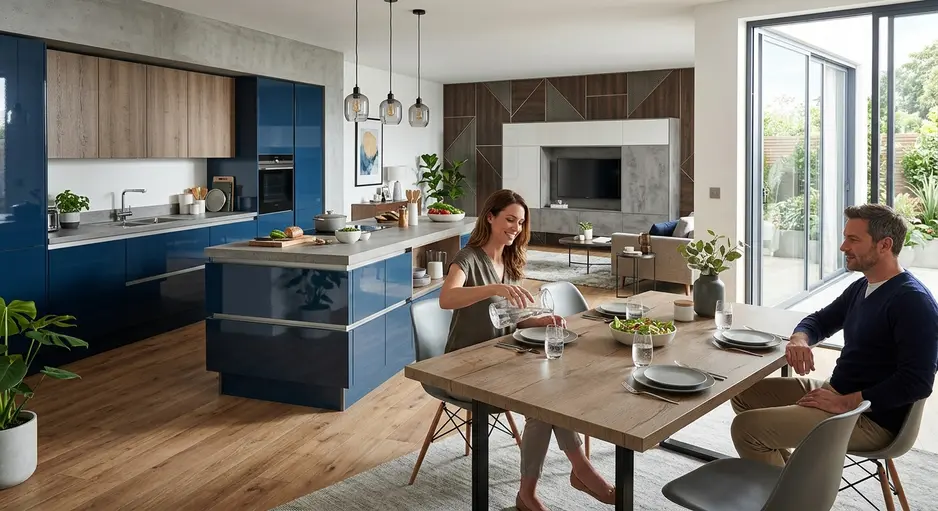
Choose a manufacturer or supplier that provides clear specifications, consistent batches, care guidance, and after-sales support. You can explore decorative surface options from Suntek Ply and request physical samples before selecting a design.
Top 10 Laminates Finish For Modern Interior
The best modern laminate finishes balance appearance with practical performance. Matte and wood grain are versatile, gloss adds light, and stone or metallic effects create strong accents. Fabric and leather textures can bring softness to selected areas.
Before ordering, confirm the grade, review the technical data, inspect samples, and plan edge protection carefully. Explore laminate designs, request samples from Suntek Ply, or speak with a product specialist to compare suitable options for your furniture project.
Matte, wood grain, and anti-fingerprint options are among the most popular laminate finishes for modern furniture. They pair easily with simple shapes, neutral colours, and contemporary interior aesthetics.
Matte offers low glare and an understated appearance. Gloss reflects more light and creates a polished look. The best laminate finish for furniture depends on room lighting, handling frequency, and how often you are willing to clean it.
Light or mid-tone matte, patterned wood grain, and subtly textured surfaces usually make minor wear less noticeable. Dark, plain, high-gloss surfaces tend to reveal fine scratches more clearly.
Many laminate surfaces resist occasional moisture, but that does not make the whole furniture unit waterproof. Water can enter through joints, damaged areas, or unsealed edges and affect the substrate.
Smooth matte, low-texture, and gloss surfaces are usually easier to wipe than deeply embossed designs. Easy to clean laminates still require the care method stated by the manufacturer.
