
A roofing sheet may look good when first installed, but its real quality becomes clear after years of sunlight, heat, rain, wind, and chemical exposure. This is why choosing the right ASA sheet manufacturer in India requires more than comparing prices.
Buyers should review material construction, thickness tolerance, profile design, test documents, installation support, and delivery capacity. Export buyers must also check packaging and shipment documentation. This guide explains how ASA sheets work, where they are used, and what to ask an ASA sheet exporter in India before placing an order for a long-lasting roofing material.
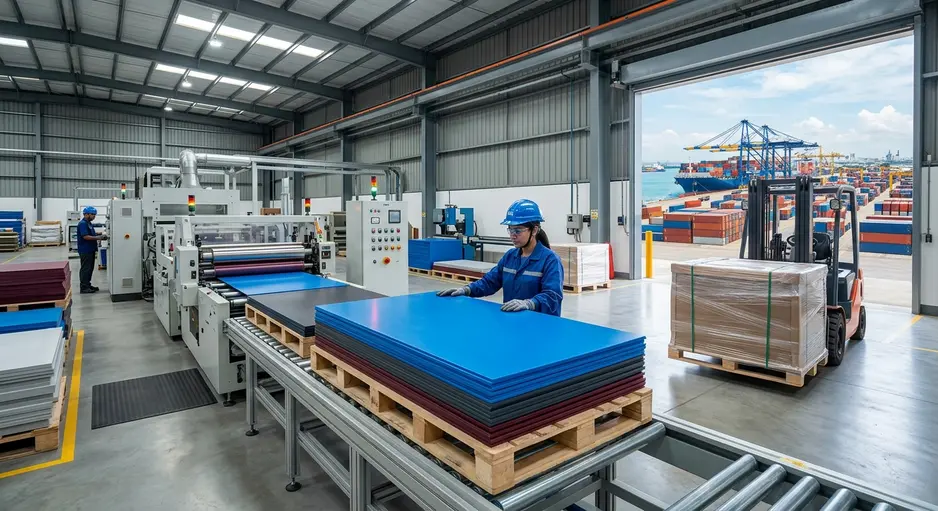
ASA stands for acrylonitrile styrene acrylate. It is an engineered thermoplastic valued for its ability to handle outdoor exposure. In roofing products, ASA is often used as a protective surface over a structural base material.
The exact design can differ between products. Buyers should not assume that every sheet has the same layer thickness, raw material grade, strength, or expected performance. These details should be confirmed through a current technical data sheet.
Co-extrusion brings two or more material layers together during production. In co-extruded ASA uPVC sheets, the outer ASA surface faces the weather. The substrate provides shape, rigidity, and structural support.
Some multi-layer roofing sheets may also have a separate underside or core design. The number and purpose of the layers depend on the product. Ask the supplier to explain the layer structure instead of relying only on the sheet’s total thickness.
The outer layer helps protect the base from sunlight and changing weather. Its formulation can affect colour retention, surface finish, and outdoor ageing. A thin or inconsistent surface may not perform like a well-controlled layer, even if both sheets have a similar overall thickness.
Buyers should request information about layer composition, colour tolerances, and any available weathering results. Samples from the same grade being quoted are also useful.
A UV resistant roofing material is important in places that receive strong sunlight for much of the year. Roofs must also face rain, humidity, dust, and regular temperature changes. ASA surfaces are selected for exterior use because outdoor weatherability is a key material feature.
Actual service life still depends on the grade, surface construction, pigment, climate, installation, and maintenance. Buyers should ask for documented performance rather than accepting a general durability claim.
Corrosion resistant sheets can be useful for coastal buildings, agricultural structures, workshops, and selected processing units. Unlike untreated metal, polymer-based sheets do not rust in the same way.
That does not mean every sheet is suitable for every chemical environment. Chemical resistant roofing sheets must be checked against the exact substance, concentration, temperature, and exposure period. Fasteners and accessories also need suitable corrosion resistance.
ASA roofing may form part of a heat insulation roofing material system, but the sheet alone does not determine indoor temperature. Colour, thickness, roof profile, ceiling design, ventilation, air gaps, and added insulation all influence comfort.
For hot buildings, buyers should assess the complete roof assembly. A lighter roof colour, planned ventilation, and suitable insulation can often be more effective than choosing a sheet on a single claim.
A lightweight roofing solution can reduce handling effort and dead load on a building. It may also help during renovation work where the existing frame has limited capacity. Structural suitability must still be checked by a qualified professional.
Performance as an impact resistant roofing material varies with formulation, profile, thickness, temperature, support spacing, and test method. Request results for the exact product grade under consideration.
ASA roofing sheets can provide a neat, uniform finish for new buildings and extensions. Available colours, textures, profiles, and matching accessories vary by supplier. Confirm these details before finalising elevations or ordering related components.
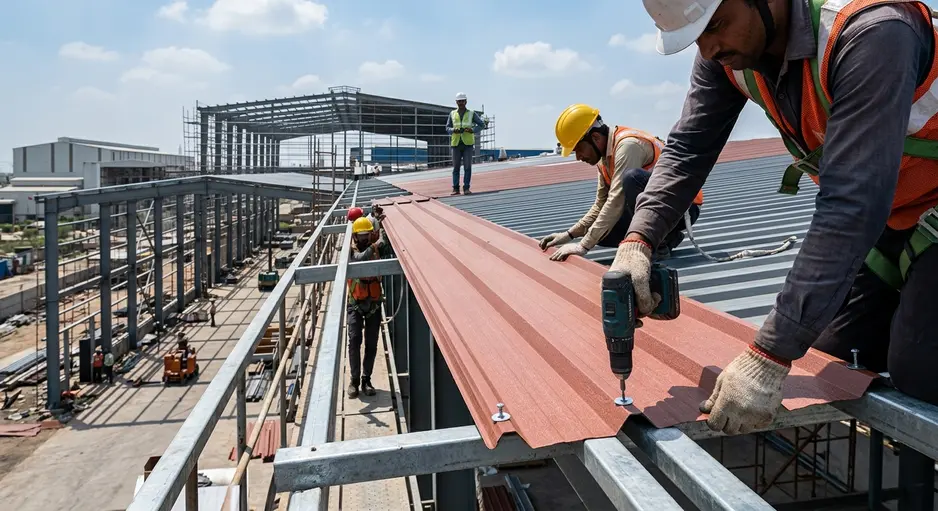
Potential applications include warehouses, workshops, storage areas, logistics buildings, and production units. In corrosive locations, buyers should examine the full system, including fasteners, sealants, flashings, gutters, and supporting members.
ASA roofing sheets may be considered for poultry sheds, dairy facilities, farm structures, parking shelters, market areas, and commercial extensions. Ventilation, cleaning chemicals, moisture, and animal-related emissions should be assessed before selecting a product.
Common outdoor roofing applications may include terraces, garages, pergolas, covered walkways, balconies, and garden structures. The correct roof slope and secure fastening pattern are vital because lightweight sheets must resist wind uplift and water entry.
ASA sheets for roofing and wall cladding can help maintain a consistent appearance across a building. Vertical wall cladding applications have different fixing and overlap needs from roofs. Designers should account for profile direction, thermal movement, openings, corners, and wind pressure.
For example, a coastal warehouse may prioritise salt-air exposure, wind design, colour retention, and suitable fasteners. A livestock shed may place greater weight on ventilation, cleanability, chemical exposure, and indoor comfort.
Key strength: Outdoor weatherability and corrosion resistance.
Important consideration: Performance depends on surface quality, substrate design, profile accuracy, and production consistency.
Key strength: Lightweight construction and practical handling.
Important consideration: UV stability and impact behaviour can vary by formulation and product grade.
Key strength: Daylight transmission and impact performance in suitable applications.
Important consideration: Expansion, scratching, glare, and heat gain require careful design.
Key strength: Translucent options can bring daylight into a building.
Important consideration: Surface ageing and fibre exposure may be concerns with unsuitable or lower-grade products.
Metal provides high structural strength and is widely available, but it may transmit heat, increase rain noise, and corrode without suitable protection. Fibre cement can perform well in appropriate uses, although it is heavier and requires careful handling.
No roofing material is best for every building. ASA may be preferred when surface weatherability, colour retention, and corrosion resistance are priorities. Polycarbonate can be a better choice when daylight is essential. Metal may suit projects that need particular structural capacities or longer spans.
The best sheet is one designed for the building’s heat, humidity, rainfall, wind load, and chemical exposure. Review UV performance, colour, ventilation, roof slope, support spacing, and insulation as one system. Installation quality is as important as the sheet material.
A dependable ASA sheet manufacturer should be able to explain how product consistency is checked. Before ordering, ask about:
There is no single specification that suits every roof. A useful quotation should identify the exact product and its working dimensions. Request the following details:
Marketing terms such as weatherproof, unbreakable, or maintenance-free need context. Request a signed technical data sheet and any current test documents relevant to your project. These may cover accelerated weathering, colour change, impact, tensile or flexural behaviour, chemical compatibility, and fire classification.
Documents should match the grade being quoted. Also read the warranty terms, exclusions, installation conditions, and claim process. A long warranty headline has limited value if its coverage is unclear.
A capable ASA sheet supplier should help buyers select a profile, estimate quantities, choose fasteners, and understand storage and installation requirements. Ask whether installation instructions are available and who will answer technical questions during the project.
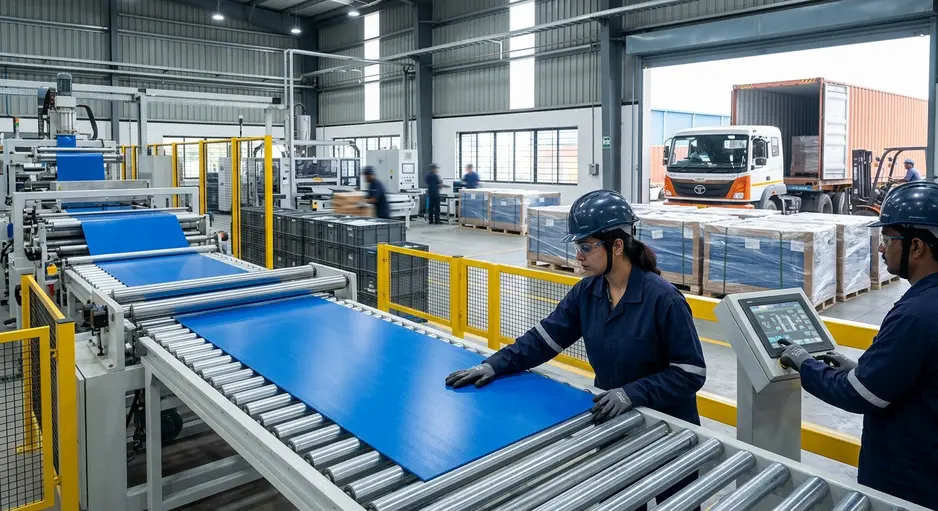
International orders may travel long distances and pass through several handling points. Packaging should reduce abrasion, edge damage, movement, and deformation. Ask about bundle configuration, protective wrapping, labels, edge protection, and container-loading plans.
An experienced export process may involve a commercial invoice, packing list, certificate of origin, technical documents, inspection records, and product labels. Requirements differ by destination, project, and buyer. HS codes and market-specific compliance should be confirmed before shipment.
Discuss available lengths, profiles, colours, minimum quantities, production lead times, sample approval, shipment terms, and port arrangements. The quotation should also explain how shortages, transit damage, and quality claims will be handled.
Buyers considering Suntek as an ASA sheet supplier in India should request current product details directly from the company. Confirm available profiles, sizes, colours, technical specifications, test documents, warranty terms, order quantities, lead times, packaging, and export experience.
Best ASA Sheet Manufacturer and Exporter in India
The right roof should be selected on proven specifications, not price alone. Review UV-weathering information, profile dimensions, thickness tolerances, chemical compatibility, fastening details, installation guidance, quality controls, and warranty conditions.
Whether you need an ASA sheet manufacturer, ASA sheet exporter, or ASA sheet supplier, ask clear questions and obtain written documents before ordering. Planning an industrial, agricultural, commercial, or residential project? Contact Suntek to request current specifications, profile options, samples, test documentation, lead times, and a project-specific quotation.
ASA stands for acrylonitrile styrene acrylate. It is a thermoplastic used in outdoor products because of its weatherability. In a roofing sheet, it is commonly used as an exterior surface over a structural substrate. The exact construction should be confirmed with the manufacturer.
They may suit Indian conditions when the grade, profile, thickness, support spacing, and installation match the project. Strong sunlight, monsoon rain, humidity, coastal air, and wind loads should all be assessed before selection.
There is no universal service life. Longevity depends on resin quality, surface-layer construction, colour, UV exposure, climate, installation, chemical contact, and maintenance. Review verified performance data and written warranty terms for the exact product.
ASA is chosen for exterior weatherability, but some colour change may occur over time. The result depends on pigment quality, formulation, exposure direction, climate, and surface construction. Ask for available colour-change or weathering documentation.
No single thickness is best for every building. Selection depends on the sheet profile, span, purlin spacing, wind load, roof slope, building use, and engineering requirements. Total thickness should be assessed with surface quality and profile strength.
