
Plywood can look fine at first and still fail after installation. Swelling, warping, weak screw holding, core gaps, and delamination often appear when the selected grade does not suit the application. A bedroom wardrobe, for example, faces far less moisture than a cabinet installed below a kitchen sink.
Choosing a reliable plywood manufacturer in India involves more than comparing sheet prices. Buyers should review the plywood grade, thickness, bonding, core construction, test documents, supply capacity, and after-sales support. This guide explains what furniture makers, contractors, dealers, architects, and homeowners should check before ordering.
Uniform thickness is important for modular furniture, CNC cutting, laminating, edge banding, and site installation. Even small variations may affect cabinet alignment or create extra sanding work. For large orders, ask the manufacturer to state the declared thickness and applicable tolerance.
Core construction also deserves attention. Veneer layers should be placed evenly, with limited gaps or overlaps. The sheet should remain flat, while its cut edges should show consistent layers. Better core construction supports clean machining and dependable screw holding.
Terms such as “premium,” “commercial,” and “waterproof” do not provide enough technical detail on their own. Ask for a grade-specific product sheet and confirm the intended use. Relevant standards may include IS 303 for general-purpose plywood, IS 710 for marine plywood, and IS 5509 for fire-retardant plywood.
A dependable plywood manufacturing company should be able to explain order quantities, dispatch timelines, batch identification, delivery arrangements, and complaint procedures.
MR plywood is moisture-resistant, but it should not be treated as fully waterproof. It is commonly considered for wardrobes, office desks, wall panels, shelves, and other furniture used in dry interiors.
BWP plywood is intended for areas that need greater resistance to water and humidity. Common plywood applications include kitchen cabinets, bathroom storage, utility units, and furniture in humid rooms.
Marine plywood is designed for demanding exposure and strong delamination resistance. Where IS 710 compliance is specified, buyers should request documents linked to the chosen product.
Fire-retardant plywood may be needed where a project has defined fire-performance requirements. Procurement teams should compare test reports with the architect’s or consultant’s specification.
Furniture-grade plywood should provide a smooth surface, dimensional stability, clean edges, and suitable screw holding. It should also work with the planned finish, such as laminate, veneer, paint, or edge banding.
The plywood manufacturing process begins with log conditioning and veneer peeling. Veneers are inspected, graded, and dried before bonding.
Adhesive is applied before veneers are arranged in layers. Adjacent layers generally run in alternating grain directions. This cross-laminated construction improves stability.
The assembled veneers are pressed under controlled heat and pressure. Panels are then trimmed, sanded, calibrated, inspected, and marked.
Quality checks may cover bond integrity, water resistance, visible core gaps, overlaps, sheet dimensions, and plywood thickness.
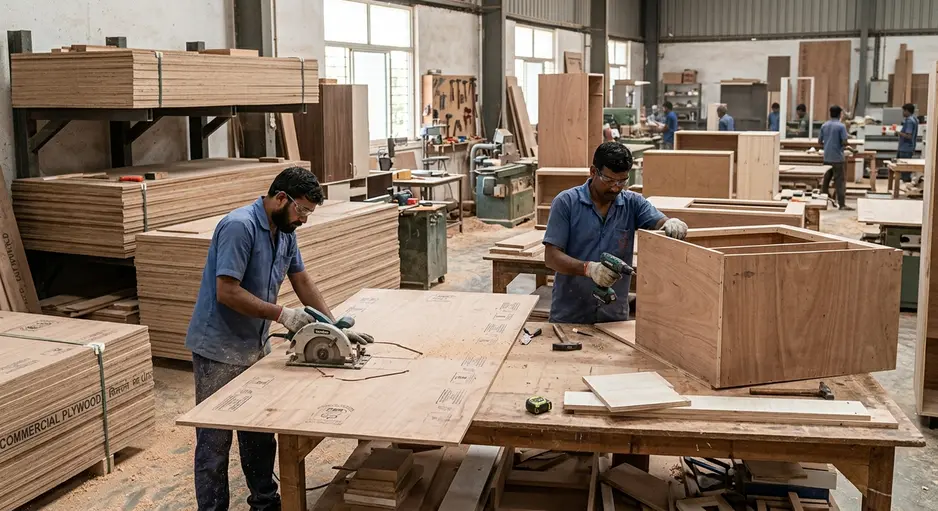
Check whether the sheet is flat and evenly sanded. Look for open splits, severe warping, excessive face repairs, or damaged corners.
A plywood supplier should know the planned service conditions before recommending a product. Explain whether the panels will be CNC-routed, laminated, exposed to humidity, used with heavy hardware, or installed as part of a load-bearing design.
Thin panels may suit drawer bottoms, cabinet backs, and lightweight decorative work. Medium thicknesses are often considered for partitions and cabinet components. Thicker panels may be used for shelves, counters, tables, and demanding joinery.
Plywood for construction must be selected for its exact role. Interior work, temporary applications, formwork, and structural use have different needs.
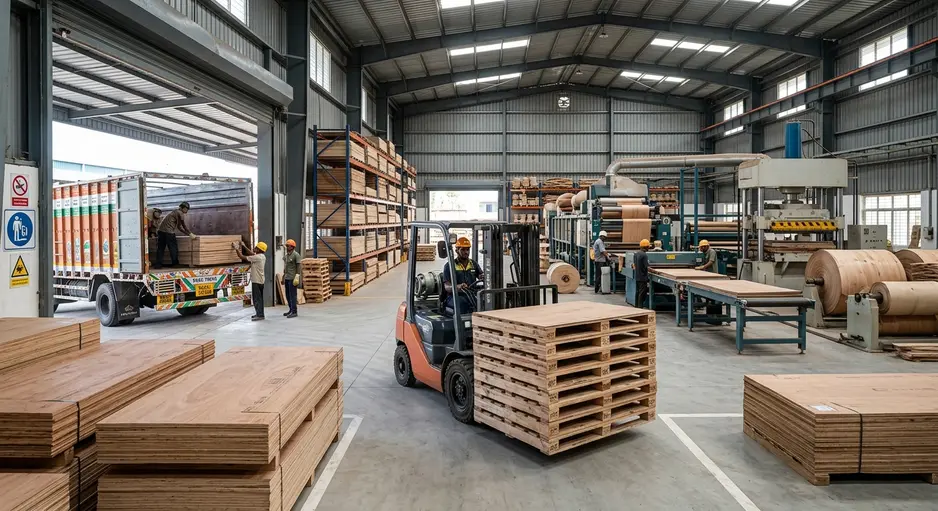
Consistent thickness improves CNC accuracy, cabinet alignment, laminate bonding, and edge-band finishing.
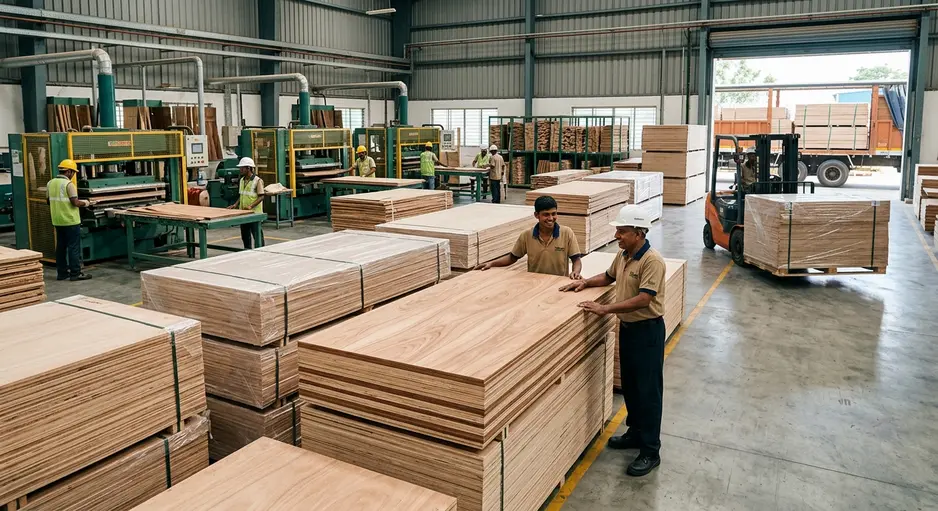
A manufacturer produces panels and controls production specifications. An authorized distributor may hold regional stock and provide faster delivery. A plywood wholesale supplier can support bulk or dealer-level orders.
A search for a plywood manufacturer near me should not end with the closest address. Compare local stock, delivery reliability, product documents, dealer status, technical support, and complaint resolution.
Plywood wholesale price in India varies with grade, sheet dimensions, thickness, veneer and core quality, bonding requirements, surface calibration, testing, and certification needs.
Order volume, packaging, freight, delivery location, and product mix also affect the quotation.
Plywood Manufacturer & Supplier in India
Selecting a plywood manufacturer is about application fit, documented grade, consistent production, and dependable supply. Compare technical information and total project cost instead of relying only on a “waterproof” claim or the lowest price per sheet.
To discuss suitable options with Suntek Ply, share your project type, required grade, thickness, quantity, delivery location, and applicable specification through the company website.
The best choice depends on moisture exposure, load, finish, and design.
MR is intended for moisture resistance in mainly dry interiors. BWP offers higher resistance for moisture-prone areas. Marine-grade plywood is designed for more demanding exposure.
Marine-grade material offers high water and delamination resistance when correctly manufactured. Its service life still depends on edge sealing, installation, joints, maintenance, and exposure.
Check grade markings, declared standards, test reports, thickness tolerance, face quality, visible core construction, warranty terms, and supplier history.
Direct buying may suit large, repeat, or planned orders. Distributors can be more efficient for small quantities and fast regional delivery.
The answer depends on whether the material is for interiors, formwork, temporary work, or a structural application.