
A leaking sink, damp bathroom, or wet boat deck can cause ordinary plywood to swell and separate. These demanding spaces need a panel with a stronger bond and a more consistent core.
Marine plywood is a high-quality panel made with durable veneers, water-resistant adhesive, and tightly controlled core defects. It is designed for wet, humid, and demanding environments. However, “marine grade” does not mean that bare wood can remain underwater forever.
Quality depends on the stated standard, veneer construction, bonding, installation, and maintenance. Buyers should check certification and technical data instead of trusting a “waterproof” label alone.
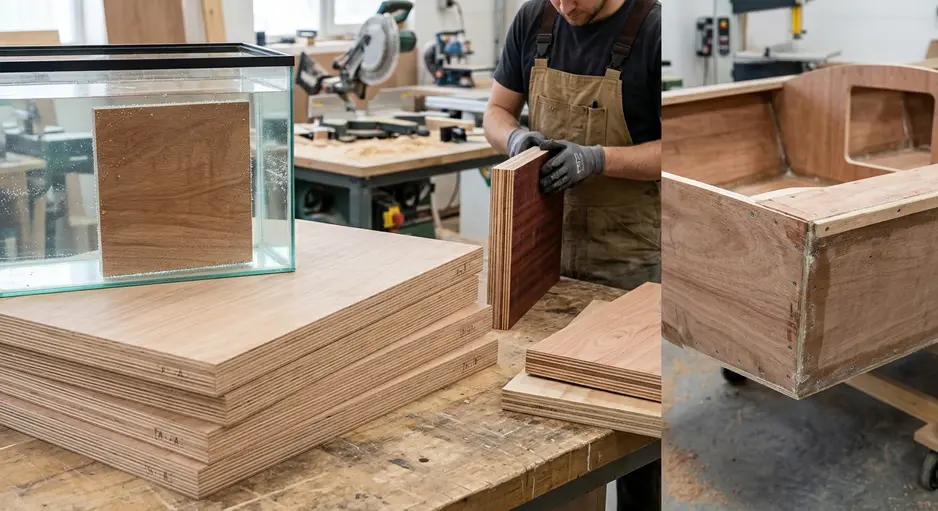
Many marine plywood sheets use selected hardwood veneers, although the exact wood species varies. Veneer density, durability, thickness, and face quality can all affect the panel’s strength and finish.
A smooth face may be helpful for painting or laminating, but appearance alone does not prove marine quality. The inner veneers and adhesive bond are just as important.
Plywood is made by arranging adjacent veneers with their grain in different directions. These cross-laminated veneer layers spread loads and reduce natural wood movement.
This construction offers better dimensional stability in humid conditions than solid wood of a similar size. The number of plies depends on panel thickness, manufacturing methods, and the applicable standard.
A well-made panel has a consistent core with minimal gaps, overlaps, and weak areas. Large internal gaps can trap moisture, reduce screw holding, and create stress points.
“Void-free plywood core” is a common commercial phrase, but allowable defects differ between standards. Buyers should inspect panel edges and review test documents rather than relying on the phrase alone.
Marine panels commonly use a durable phenol formaldehyde adhesive or another bond that meets the stated standard. This provides strong boiling water resistance and helps with delamination prevention.
The adhesive may resist water, but the wood fibres can still absorb moisture. Cut edges, holes, joints, and faces therefore need suitable protection.
BS 1088 sets requirements for plywood used in marine craft. It addresses factors such as veneer quality, bonding, panel construction, core condition, and permitted defects.
This standard is often specified for boat hull construction and related work. A printed claim is not enough, though. Buyers should ask for credible documentation or independent verification linked to the supplied product.
IS 710 is the key Indian standard associated with marine or BWP-grade plywood. It covers performance factors such as bonding quality and resistance to severe moisture exposure.
When certification is required, confirm the BIS licence number and marking through official BIS records. The mark should relate to the manufacturer, product, and current licence status.
Terms such as A-A and A-B usually describe face and back appearance. Their meaning can vary by country or grading system. They do not always confirm structural performance or adhesive durability.
A clean face can still hide a poor core. Compare appearance grade, bonding standard, veneer quality, and intended use separately.
Standard | What to check | Why it matters
Certification: BS 1088, IS 710, or the buyer’s specified standard | Helps verify defined performance criteria.
Veneer species: Hardwood or another approved durable species | Influences strength, weight, and durability.
Core quality: Minimal gaps and overlaps | Reduces weak points and uneven bonding.
Adhesive: A compliant exterior-grade bond | Improves resistance to repeated wetting.
Thickness: Actual and nominal measurements | Supports accurate fabrication and fitting.
Emissions: Destination-market compliance | Important for indoor projects and exports.
High-quality bonding and controlled veneer construction help a panel cope with splashes, humid air, and occasional saltwater exposure. It usually performs better than interior plywood in these conditions.
Saltwater exposure resistance does not remove the need for epoxy, paint, or another compatible coating. Bare panels can still take in water through faces, edges, and fastener holes.
Durable bonding reduces the risk of layers separating during repeated wetting. It also helps limit swelling compared with panels made only for dry interiors.
For the best results, seal every cut edge, drilled hole, sink opening, and joint. Moisture often enters at these points before it affects the middle of a sheet.
Cross-lamination gives the panel useful strength in both directions. A consistent core can also provide reliable screw holding and cleaner machining for cabinets, furniture, and joinery.
Not every sheet is structurally rated. Exterior structural applications must follow the project design, product documentation, and local building rules.
Exterior adhesive does not make untreated wood immune to fungus. Decay can develop when wood remains damp in the presence of oxygen and suitable temperatures.
Good drainage, ventilation, coatings, and regular inspection are essential. These measures help keep moisture below the level that supports fungal growth.
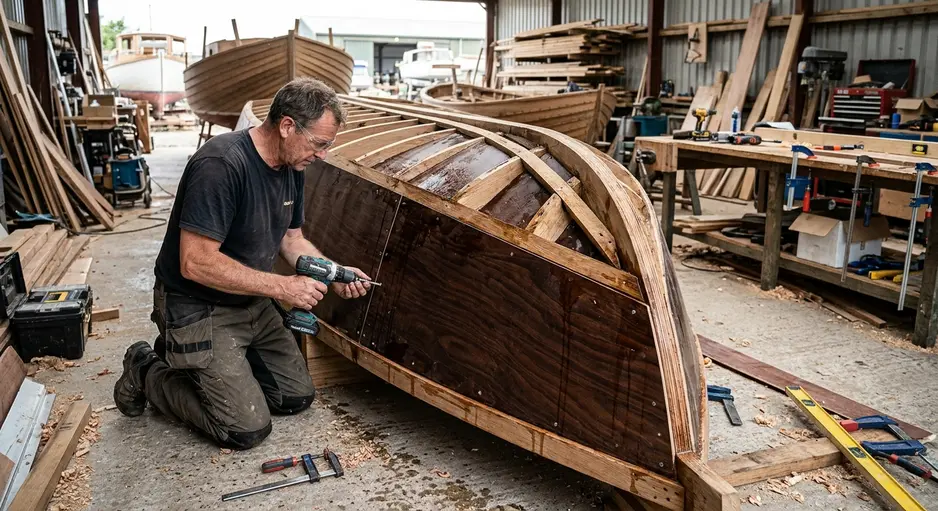
Common marine grade plywood uses include hulls, decks, bulkheads, seating, storage, and interior joinery. Verified BS 1088 material or an equivalent product specified by the designer is often considered for these projects.
There is no single best thickness for every boat. Panel thickness and framing should follow a naval architect’s or boat designer’s plans. Even a premium deck can fail if water enters through an unsealed fastener hole.
It is useful for sink units, utility cabinets, countertop bases, and areas where plumbing leaks may occur. A laminate or coating should protect the surface, while sink openings and exposed edges need careful sealing.
For cabinets in completely dry areas, BWR or interior plywood may be more economical. The level of exposure should guide the choice.
Vanities, storage units, partitions, and wall backing can benefit from a durable bond and stable core. Proper ventilation and surface finishes remain necessary in humid rooms.
Bare plywood should not be placed in a shower or left in continuous contact with water. Waterproofing details must protect the full assembly.
Marine plywood for outdoor applications can include sheltered furniture, signs, soffits, and selected exterior partitions. UV-resistant finishes, drainage gaps, and protected edges help extend service life.
Its smooth faces and stable core are also useful for premium furniture, curved parts, and precision joinery. Outdoor structural use must meet local codes and engineering requirements.
In India, plywood conforming to IS 710 is commonly described as BWP, meaning boiling waterproof, or marine-grade plywood. In that context, the terms may refer to the same standard.
Marine products in other markets may be linked to BS 1088 or another specification. Compare the stated standard, certification, veneer quality, bond tests, and intended application rather than comparing names alone.
The added cost is easier to justify where moisture exposure is likely, repairs would be difficult, or failure could damage an expensive installation. Boats, sink cabinets, transport interiors, and bathroom vanities are common examples.
Regular, BWR, or exterior plywood may be enough for dry or lightly exposed projects. Buying the most expensive grade is not a substitute for correct design.
Marine plywood price varies with sheet size, thickness, veneer species, ply count, face grade, core quality, calibration, testing, and certification. Freight, taxes, order volume, and delivery location also affect the quotation.
Instead of relying on a fixed online figure, request a current quote based on grade, dimensions, quantity, use, and destination.
A dependable marine plywood manufacturer should offer clear product identification, batch consistency, and supporting technical information. For large orders, ask for samples and approve them before production or dispatch.
When evaluating a marine plywood supplier, review available specifications, packaging, production capacity, technical support, and complaint handling. Readers can contact Suntek Ply to request current product information, availability, certification details, and a project-based quotation.
Marine plywood export requirements depend on the buyer and destination country. Confirm the required panel standard, formaldehyde-emission limits, timber legality documents, labels, test reports, and customs paperwork before shipment.
Packaging should limit moisture exposure during storage and container transit. ISPM 15 usually applies to solid-wood pallets, crates, and dunnage rather than the plywood product itself. Exporters should confirm current rules with an accredited laboratory, certification body, and customs specialist.
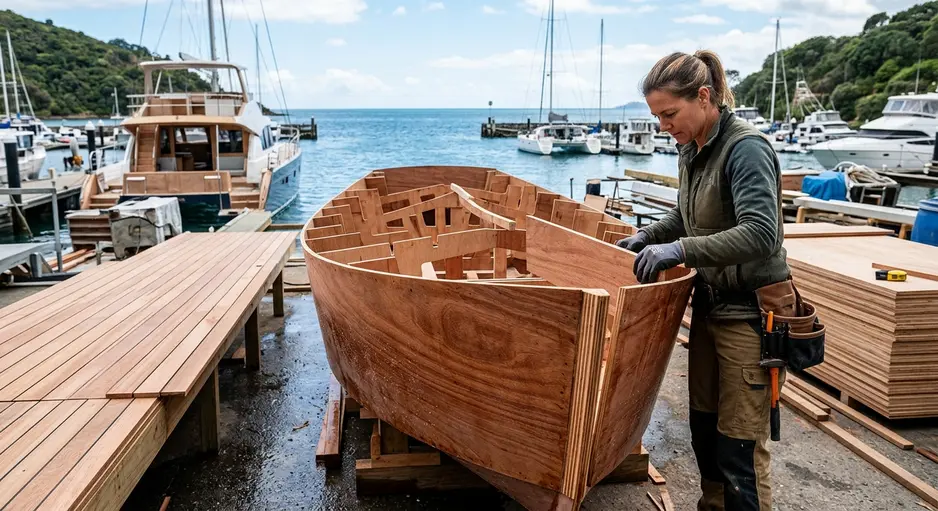
Apply a compatible epoxy, primer, paint, laminate, or coating after cutting. Give extra attention to joints, end grain, sink openings, and fastener penetrations.
Provide drainage and airflow around the panel. Use spacers or design details that prevent water traps, and do not leave sheet edges resting directly on wet surfaces.
Choose corrosion-resistant fasteners for boats and exterior work. Follow the adhesive and coating manufacturers’ instructions, including surface preparation and curing times.
Check coatings, joints, edges, and penetrations at regular intervals. Repair damaged finishes before moisture reaches the veneer. Most early failures begin at exposed edges or poor joints, not in the centre of an intact panel.
Genuine marine plywood combines durable bonding, selected veneers, controlled core construction, and improved resistance to moisture. It is not automatically rot-proof or suitable for permanent underwater use.
Choose a panel based on its verified standard, project exposure, and technical specifications. Then protect it through sound detailing and regular maintenance. For furniture, wet interiors, outdoor work, or export enquiries, contact Suntek Ply for current specifications, available thicknesses, documentation, and a project-based quotation.
No. The adhesive bond is made to withstand severe moisture exposure, but wood fibres can still absorb water. Proper sealing, drainage, installation, and maintenance are required.
Yes, if the selected panel suits the project and has an appropriate exterior coating. Protect edges and avoid prolonged contact with standing water.
Yes. Sealing is especially important on boats, outdoor projects, bathroom furniture, and around holes, joints, and cut-outs.
There is no universal thickness. The correct choice depends on the hull design, framing distance, loads, veneer quality, and the boat designer’s specifications.
Properly certified IS 710 plywood can suit moisture-prone cabinetry. Surfaces, edges, plumbing penetrations, and joints must still be protected.
